Life on the Frontier
June 10, 1881- After driving sixteen miles, we were overtaken by James Rhea at Willow Island, who was bringing word that Frank passed away. It was a very sad mother and father who had their baby, their most treasured possession, taken away from them. The child’s baby prattle was sorely missed. There were many mounds at the side of the road, giving mute evidence of suffering and sorrow.
- Emily Towell diary excerpt, Covered Wagon Women Volume 10, compiled by Kenneth L. Holmes
They came in droves, driven by the desire for land- a place to call home, a place to sustain them, to nurture growing families and to prosper future generations. But at what cost? Life on the trail was difficult, but life on the prairie was very hard. They traveled for months, sometimes getting caught in the plight of fall months and the cusp of an early winter. They forged rivers and choked down dust as they struggled across the salt flats on the trail to California. These pioneer women and the men they walked beside weren’t only heroic for westward expansion, but they carried with them, and sometimes growing within them, the promise of the future. Western expansion was, to me, one of the greatest times in our nation’s history. It was here the quiet and lowly who sought a better life- to see what was beyond the next ridge- really became the unsung heroes of the American West.
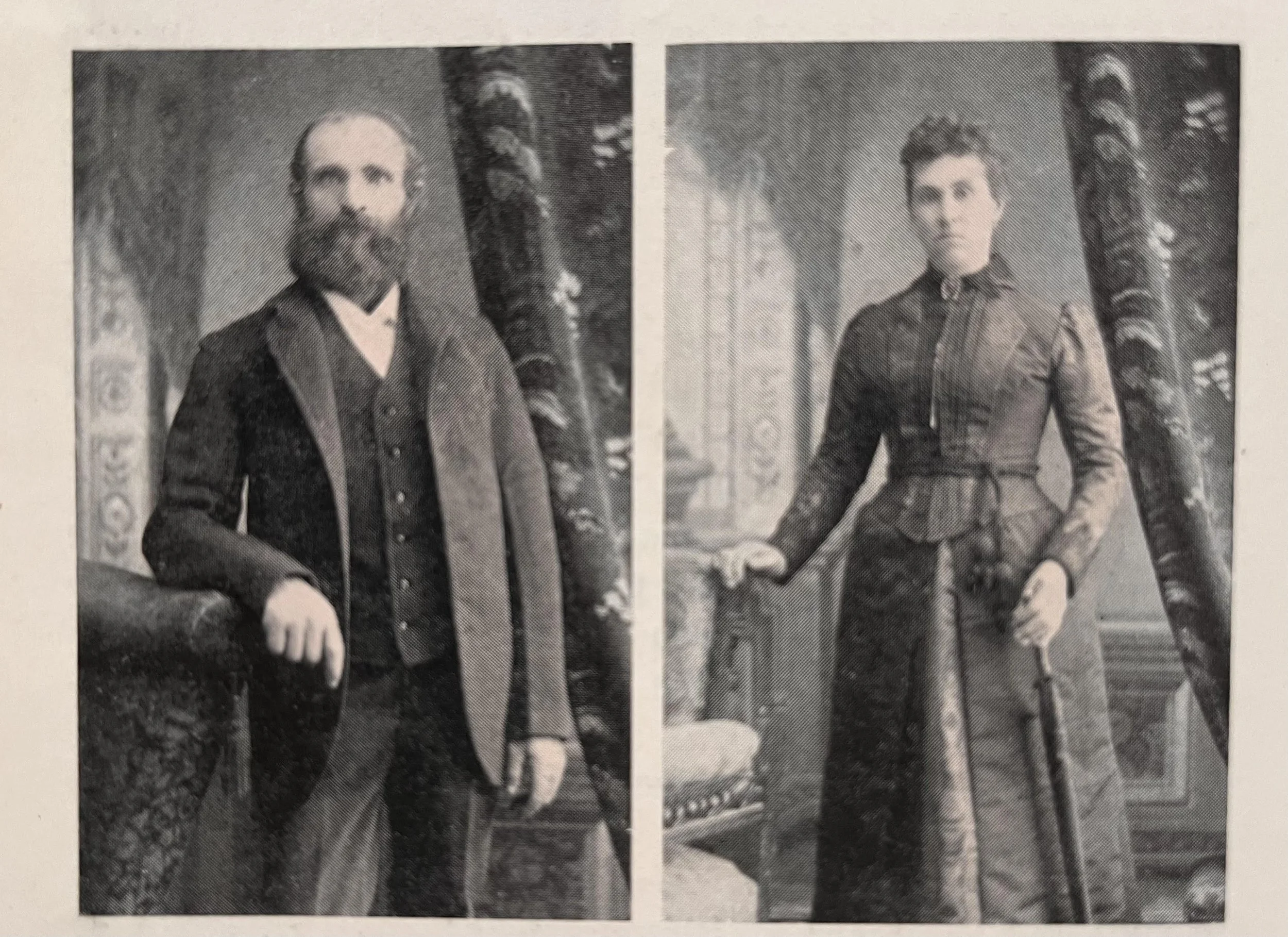
Wenzel and Susanna Turmes, German immigrants. Wenzel was born in 1840, his bride in 1841.
Many of those who crossed the plains were immigrants from other countries. Unfamiliar with America at best, and completely unprepared at worst, these families set out for the west with no home to return to in the East if homesteading didn’t work out for them. It was thrive or fail. One such family that has always held a certain fascination for me was the Wenzel and Susanna Turmes family. Wenzel and Susanna were both from Germany. He was a member of the German military, and while stationed in Paris, France, he sent for Susanna, and they were married in Paris. The Turmes started their family with Lucien and Margaret within a few years.
In 1870, once discharged from his military service, Wenzel left his family in France and traveled to New York to visit his sister. There, his intentions were to look around and see if this vast new country might serve as a better home for his growing family. It must have suited his taste, for he sent for Susanna and their two children. Susanna, alone with two young ones, crossed the ocean to reach New York and reunite with Wenzel.
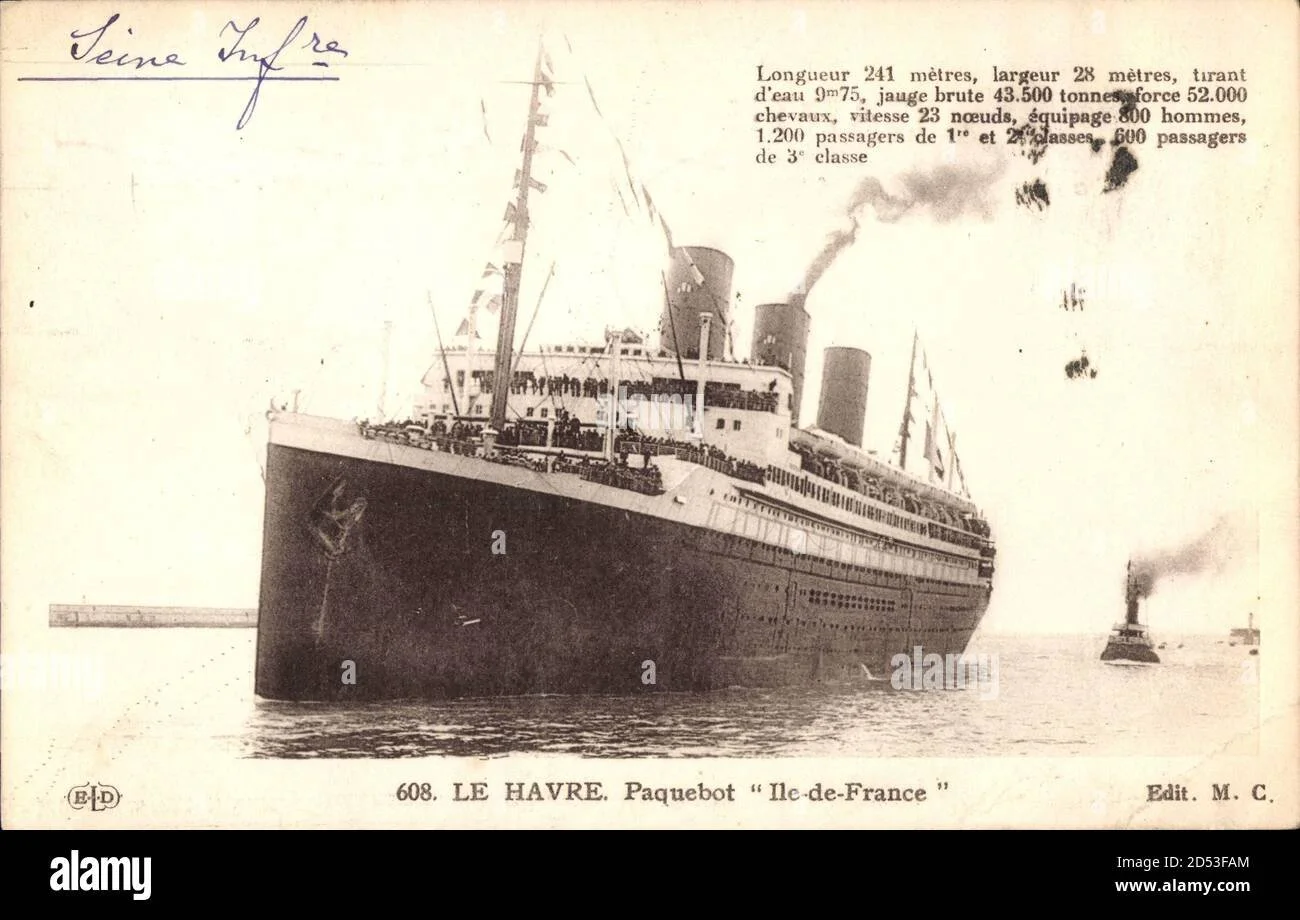
Putting it into Perspective- While this isn’t the steamer Susanna and the children took, it is one of the ships that left Le Havre, France. I don’t know which port for sure she and the children sailed from- though Le Havre to New York was a VERY common route- but I do know it was more than likely on a steamer like the one above. Wenzel might have been able to provide passage in a private cabin, or, they made the voyage in steerage, which is in the bottom of the iron-clad beast. They would have bunked in a huge room with dozens of other travelers, shared bathrooms and meals, and found little privacy. The trip on a steamer from Le Havre to New York would have been between 12 and 14 days. With two small children. Without Wenzel. Into an unknown land. And I thought a trip to the grocery store with littles was challenging. Susanna was a woman of courage.
Once reunited in New York, they didn’t stay long. The family moved west to Minnesota, where they added to their growing family. Elizabeth was born, but unfortunately, did not survive past toddlerhood. What little information provided states she died in an accident. They decided to press on further west, settling in Yankton, South Dakota. Wenzel took up farming in Yankton, and while there, John, Mary Agnes, and Rosella were born.
The family of Wenzel Turmes decided to leave Yankton after grasshoppers and drought plagued the farm. Oregon was the goal- to good land ripe for farming, and a future to grow a family in. For 90 days they continued west with a team of oxen in hopes of Oregon. Unfortunately, their oxen gave out in Idaho Territory about 25 miles east of what is now Boise, on Indian Creek. It was the fall of 1879, and with cold weather approaching, they wintered at Indian Creek with the help of friends.
Wenzel sought employment during the temporary layover. After finding work and housing as a ranch hand at the Dorsey Ranch, which is now the JR Simplot Company in Grand View, Idaho, son Joseph was added to the family. The original Dorsey Ranch was one of the first cattle outfits in the Idaho Territory. It was there that Wenzel heard of a little valley, the Shu-Fly Valley, or Shoo Fly as it was often spelled, some forty miles southwest of Dorsey’s.
So, one Sunday, his only day off, Wenzel saddled a horse and made the forty-mile ride to see the available homestead parcel. It had been filed originally by two men, Scott and Hanks in or around 1873. All that was left to show for their efforts was a single, one-room log cabin.
Wenzel was smitten.
Though there was little out there besides the cabin, there was something beyond measure- water. Through the homestead claim, Shu Fly Creek wound. Fed from springs in the mountains above the homestead, in particular Big Springs, water ran all year long, providing for crop irrigation, livestock, and household use.
Wenzel filed a claim on the available homestead, and in late August of 1880, the Turmes family moved to the Shu Fly Valley and the newly filed homestead claim.
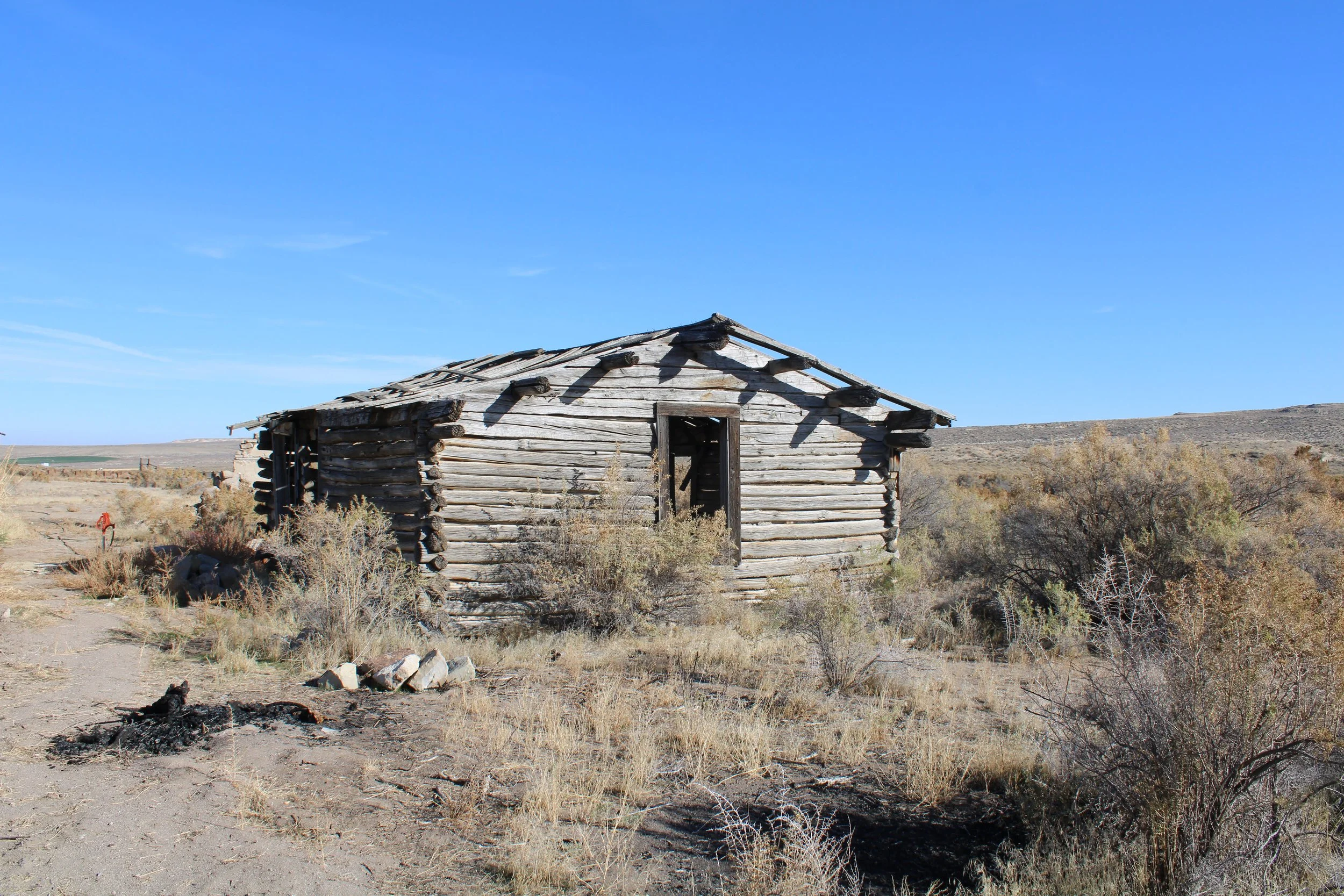
Putting it into Perspective- This is the cabin that greeted pioneering wife, Susanna, and now, her six children, one a newborn infant. How different from Germany! There was little else but the cabin and water, and Susanna had very small children to care for. There were, at the time, no neighbors, and the nearest settlement was barely in existence and a day’s wagon ride away. How lonely this little spot must have seemed upon first glance! Like she’d come to ends of the earth and decided to tame it. No matter her first thoughts on seeing her new home, she must have squared her shoulders and made the most of the moment. Despite being humble, it still stands, 156 years after being built.
Wenzel wasted no time. He and the older boys began to carve out sandstone rock and carefully placed them together like brick and built a bigger house to go along with their log cabin. Then, seeing a need for a way station, he set his sights on that. Being a full day’s journey by wagon from the nearest settlement, Bruneau, Idaho, they carved enough sandstone to erect a way station indeed, complete with four rooms- three for overnight guests, and one room a kitchen to feed visitors.
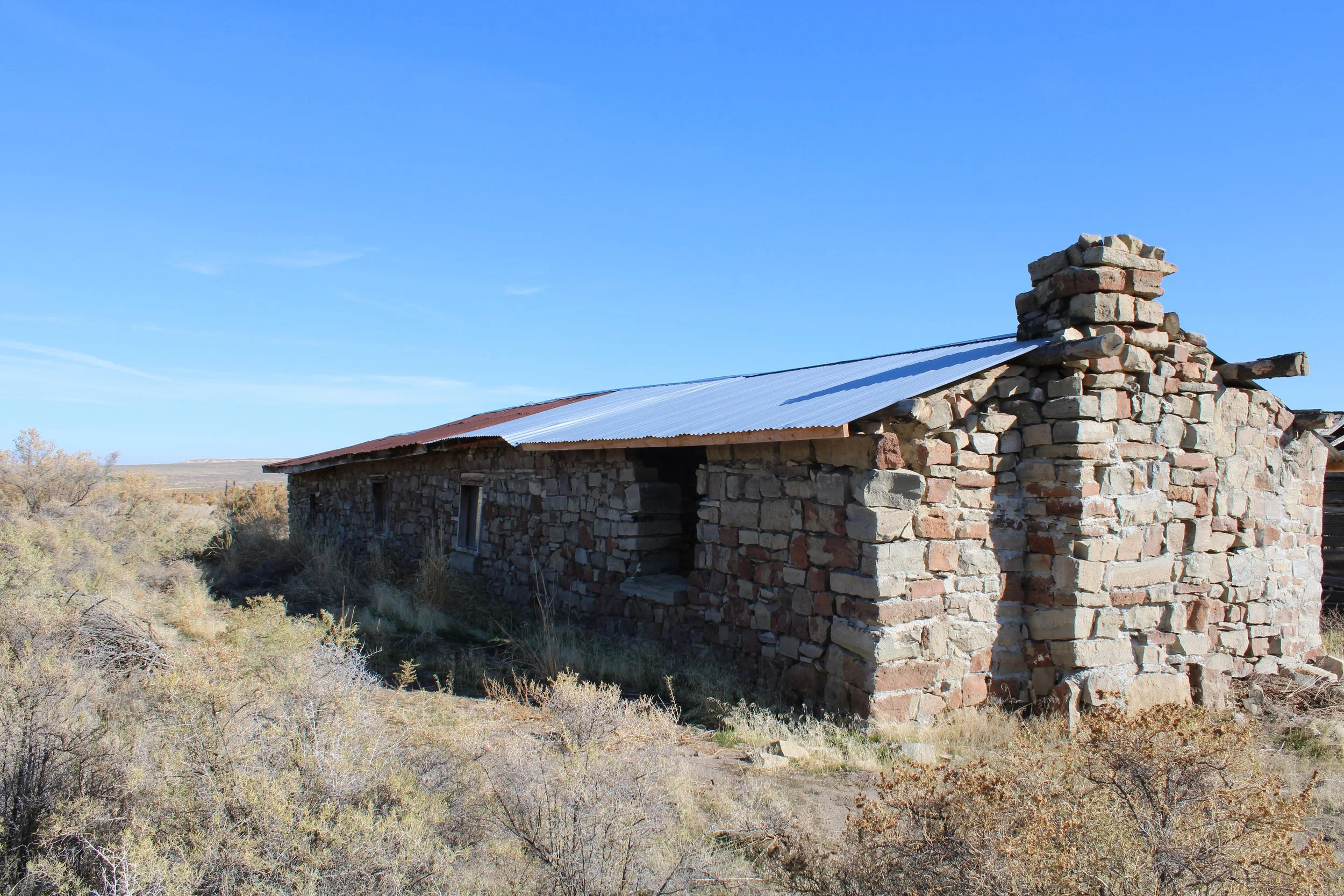
Putting it into Perspective- A testimony to frontier life, each stone in the “long house” was cut by hand in a quarry two miles from the homestead. Wenzel and Susanna built a way station for weary travelers to stop and eat, then rest the night. Many a traveler looked forward to Susanna’s homemade bread and hand-churned butter. Which to my way of thinking, meant she was milking a cow, or at least overseeing the chore done by one of the children. Two more boys were born to the Turmes couple after arriving at Shu Fly. Can you imagine a home birth, probably only Wenzel for assistance, in one of the available houses? All total, Susanna was raising 8 children, building a life out of the sage and greasewood, and teaching kids. And to top it off, there was always a cow that needed milked, laundry done by hand, gardening, and preserving fruit from the orchards and vegetables from the garden. In her time, preserving meant slicing and drying, as canning wasn’t yet a wide-spread availability. Not to mention expensive to get into.
Wenzel and the boys built the farm, turning soil for grain fields, digging irrigation ditches and a main pond complete with a headgate which fed all the ditches and fields. Together, Wenzel and Susanna planted orchards and tended them. While Wenzel and the boys garnered a beef cow herd, Susanna and the girls fed the guests. Two more children were born to the Turmes.
The kids attended school in the east room of the guest house, taught by a teacher employed by the Turmes and surrounding neighbors. Mr. John McVann, a nearby homesteader himself, instructed for several years before moving on to improve his own property.
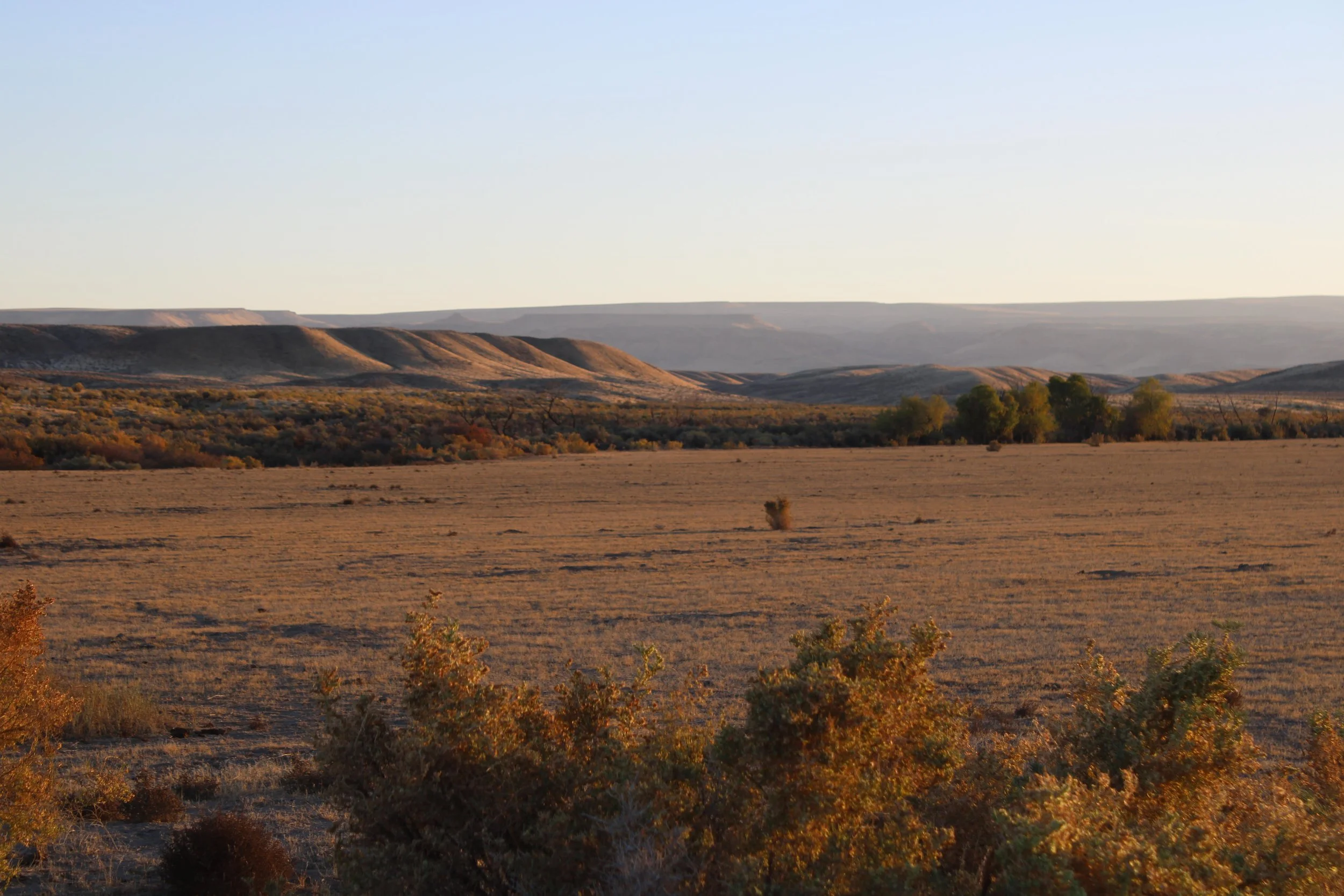
Putting it into Perspective- This was once a grain field- the edge cut with irrigation ditches to water the precious crop. Far to the right, beyond the picture’s view, was the orchards lovingly tended by the Turmes family. They are gone now but once thrived beautifully. It would have taken lots of oats to supply the animals needed to plant, harvest, and tend the fields. Not only did the animals- heavy work horses- have to help provide for the family, they provided for themselves, also. There would have been hay grown, cut, dried and stacked for the winter months. And, don’t forget- saddle horses to get beef cattle gathered off the range, and milk cows who provided precious milk for many of the items the family needed- cheese, cream, soap, and butter.
The Turmes were gracious, always opening their home to travelers and those seeking aid. For several years Susanna looked after Captain Johnny White, an aged sea captain, who never could shake his love of the waters. He settled on a farm along the Snake River, near the mouth of the Bruneau River and fished. He’d salt his salmon catch in fifty-gallon barrels and sell them in Silver City to the miners. At the end of his life, he fell ill, and Susanna cared for him for several years. When Captain White passed, he was buried in the family cemetery overlooking the Shu-Fly valley.
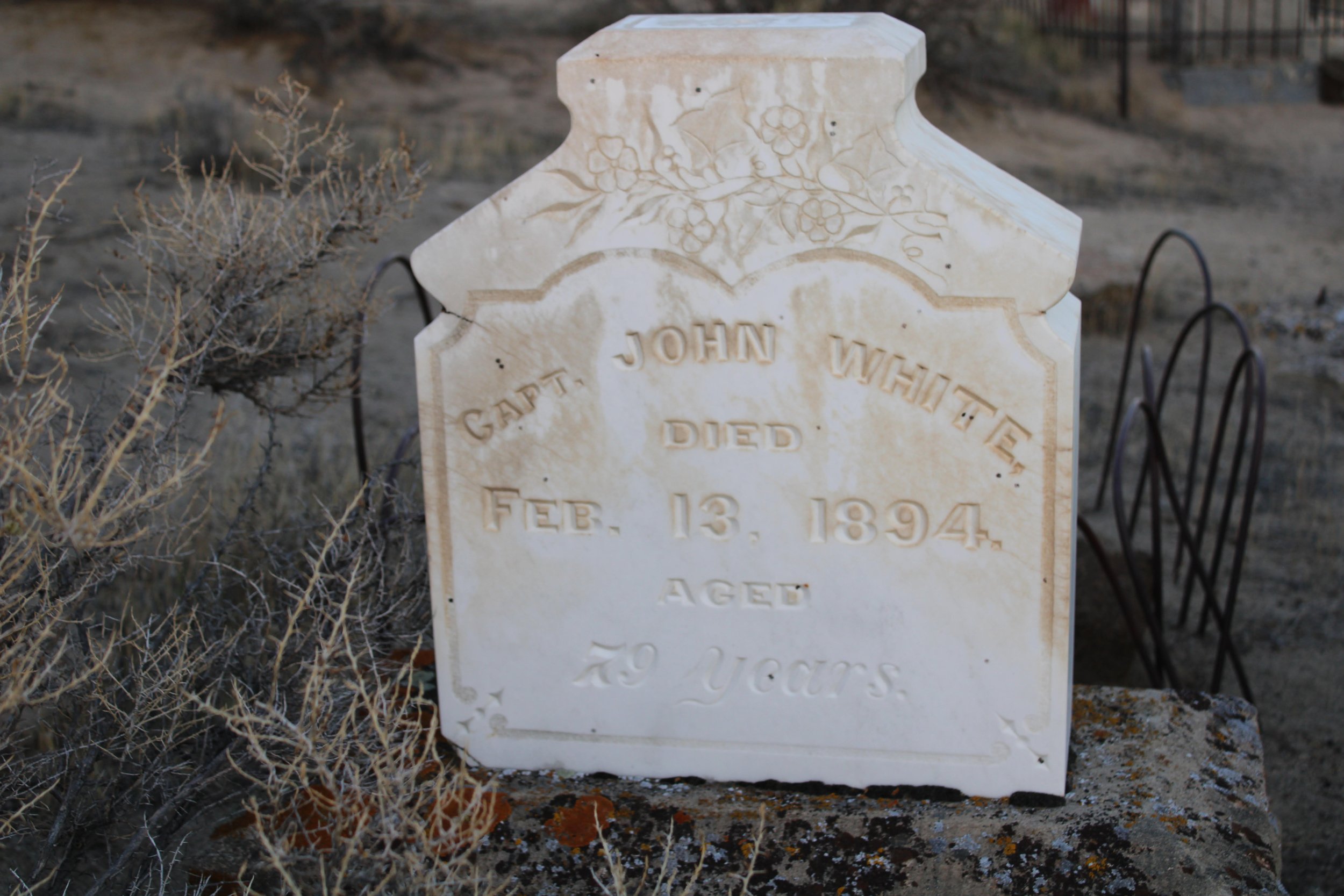
Putting it into Perspective- Captain Johnny White, a sea captain from Ireland, was a permanent guest with the Turmes family for several years. When he took ill and passed away, he was buried in the family cemetery overlooking the little homestead. How Susanna must’ve understood the plight of the aging from far away homelands! She herself had family across the world, of whom I don’t know if she heard from. Surely, there must have been a beloved sister, friend or mother who she longed to hear from- to show the fruits of the work of her hands and the children of whom she was so proud.
So why then, with thriving orchards and cultivated land, is the Shu-Fly valley once again dominated by the sage and grease wood brush? The reservoir and the head gate that once rushed with water remain jobless. Across the meadows ditches still cut the land. Yet, the family of Turmes is gone.
The land is always changing. In 1916, historical records offer an explanation: earthquake.
It triggered great change for the area. Big Springs, high above, which was once a river flowing out of the earth, was reduced by half. The Big Springs ranch struggled to keep their meadows watered. Without Big Springs gushing as it had, the little winding Shu-Fly Creek dwindled. The Turmes family didn’t have enough water to keep their fields growing and stock watered. But the homestead remained.
First to go was Wenzel himself, passing in 1904 at 64 years old. Susanna, Granny Turmes to neighbors and friends, passed in 1931, 15 years after the earthquake decimated spring water in the area. The family hauled water for survival, and to their enormous credit, several of Susanna’s sons stayed on at Shu-Fly for years until Susanna passed so that she might remain where her heart was. The children of Wenzel and Susanna, losing their roots in a vast country, scattered, one son going far to California. Susanna was buried in the family cemetery next to Wenzel, and the remaining members scattered from Bruneau to Boise once she was gone, though the cemetery holds in peaceful sleep several of the Turmes sons along with their parents.
As time changes, so does man’s answers to common problems such as water. It begs to wonder how Wenzel would feel to know that just a few miles down-stream, farming along the banks of dry Shu-Fly Creek is thriving, thanks to irrigation wells. The Turmes’s meadows are still clear, the greasewood and sage brush slowly taking over. Unbelievably, the little log cabin that welcomed Susanna and the little Turmes children the fall of 1879 remains. The clover huller waits where they left it in 1931 after Susanna’s passing.
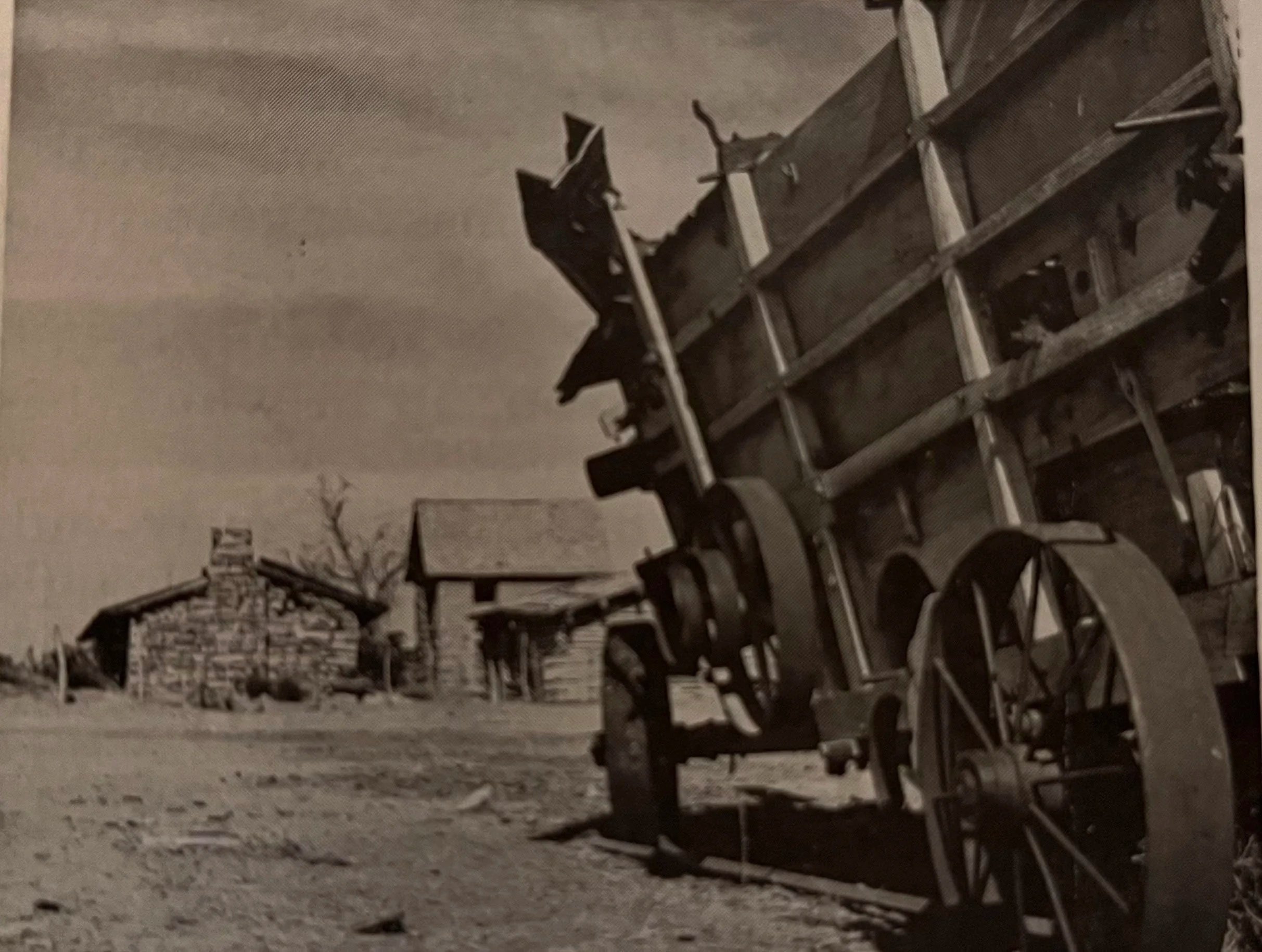
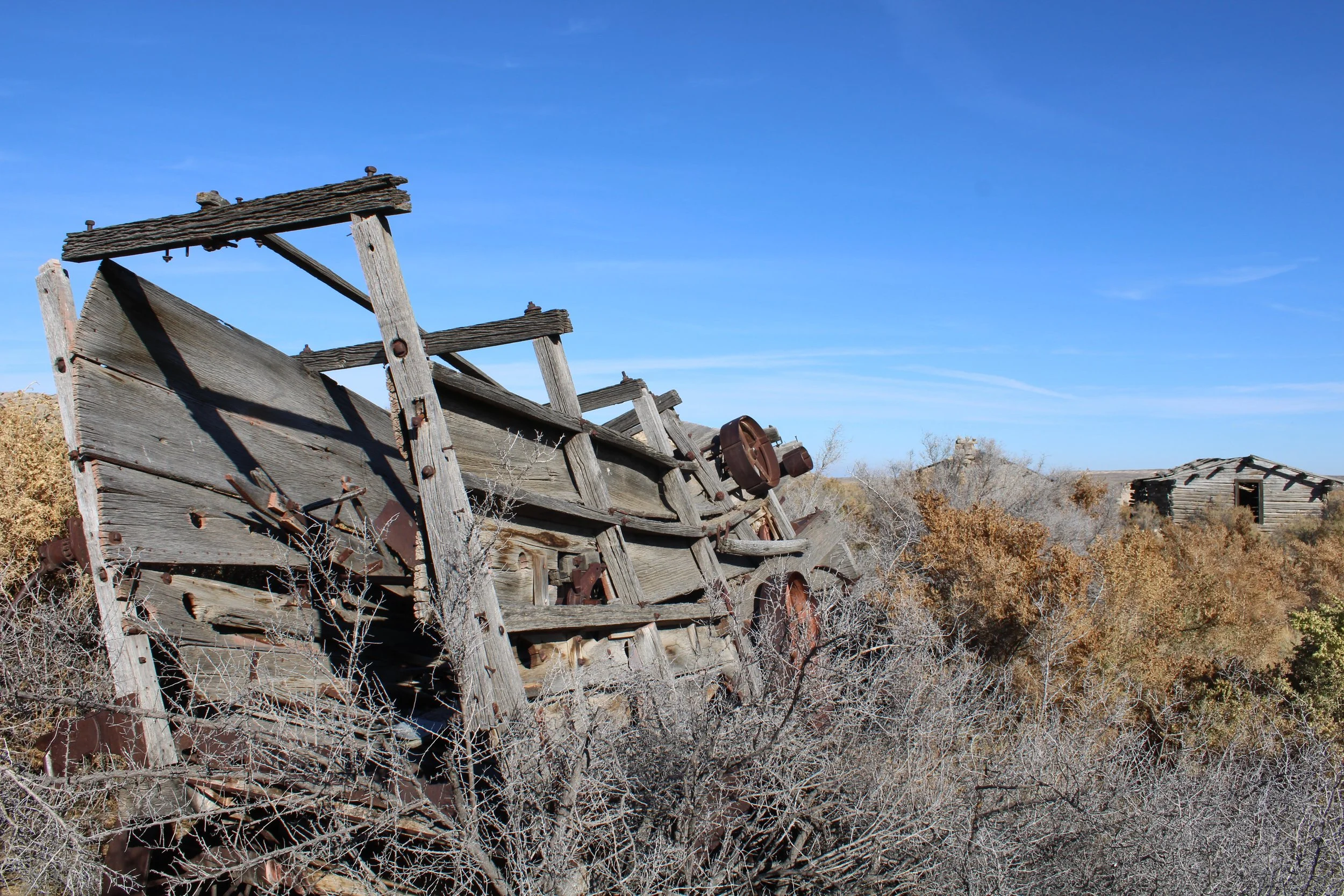
Putting it into Perspective- Then and now- this clover huller has sat in the same place since the Turmes family left Shu-Fly Creek- a testimony to the prosperity they enjoyed through farming. How many people Susanna had the opportunity to meet through the way station- to feed and offer respite to the exhausted and hungry. She’d faced loss and heartache and watched as the farm she and Wenzel carved out of the dry earth slowly wasted away and returned to the way it was before they settled there. Susanna had her children and grandchildren, but the wait to see Wenzel again must have grown long. She stayed close with the land that provided so richly for her growing family, and when it was time, that land cradles her in death as she sleeps.
However, though the Turmes family is gone, their laughter and voices no longer echoing across the meadows they once tended carefully, new voices carry on the wind. The Turmes family is a long way from forgotten, and their little homestead is still, after a fashion, a way station. Many travelers stop along the way and wander through the long house built with manpower by Wenzel and his sons. The log cabin still waits for another family to move in.
A young family owns the property now, caring for the remaining buildings in a way that would make Susanna proud. The love of family was deeply embedded in the walls of the houses, strengthening and fortifying them against time. Even though they are gone, Turmes’ true legacy of love and family lives on.
What do you think? What did it take for the pioneers to sail the ocean and travel the expanse of the continent in search of a better life? What kind of faith in God would it take to leave everything you know and start over in a new world? Does your family tree have a branch of courageous immigrants or pioneers? I’d sure love to hear about them. Share with me their story at-www.authorlynmiller@gmail.com.
Until next month- God Bless-
Lyn
“I can do all things through Him who gives me strength.”
~ Philippians 4:13
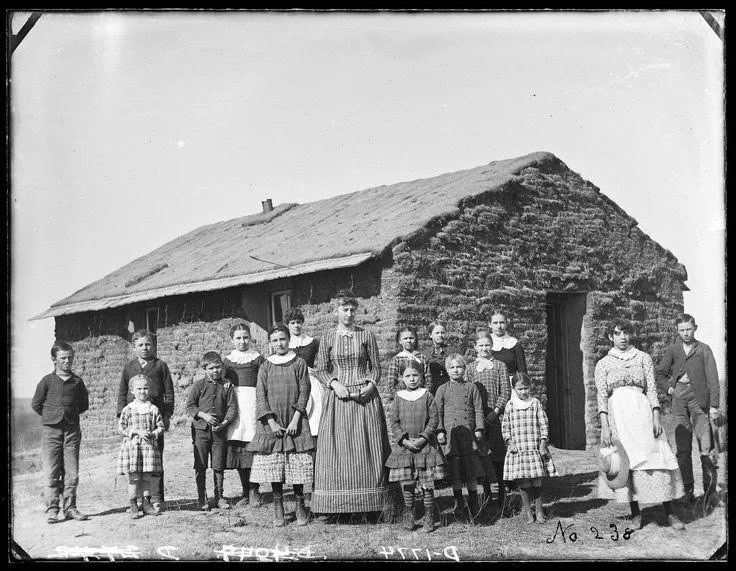
September History Blog- BACK TO SCHOOL- School days on the frontier. Long before public school, neighboring families united to fund the education of their children. Teachers were crucial, and the expectations for both teachers and students were immense. Join me next month as we dive into frontier education in honor of a new school year in modern times!